This model is based off of the Neolithic burial mound Maeshowe, located in the Orkney Islands of Scotland. While
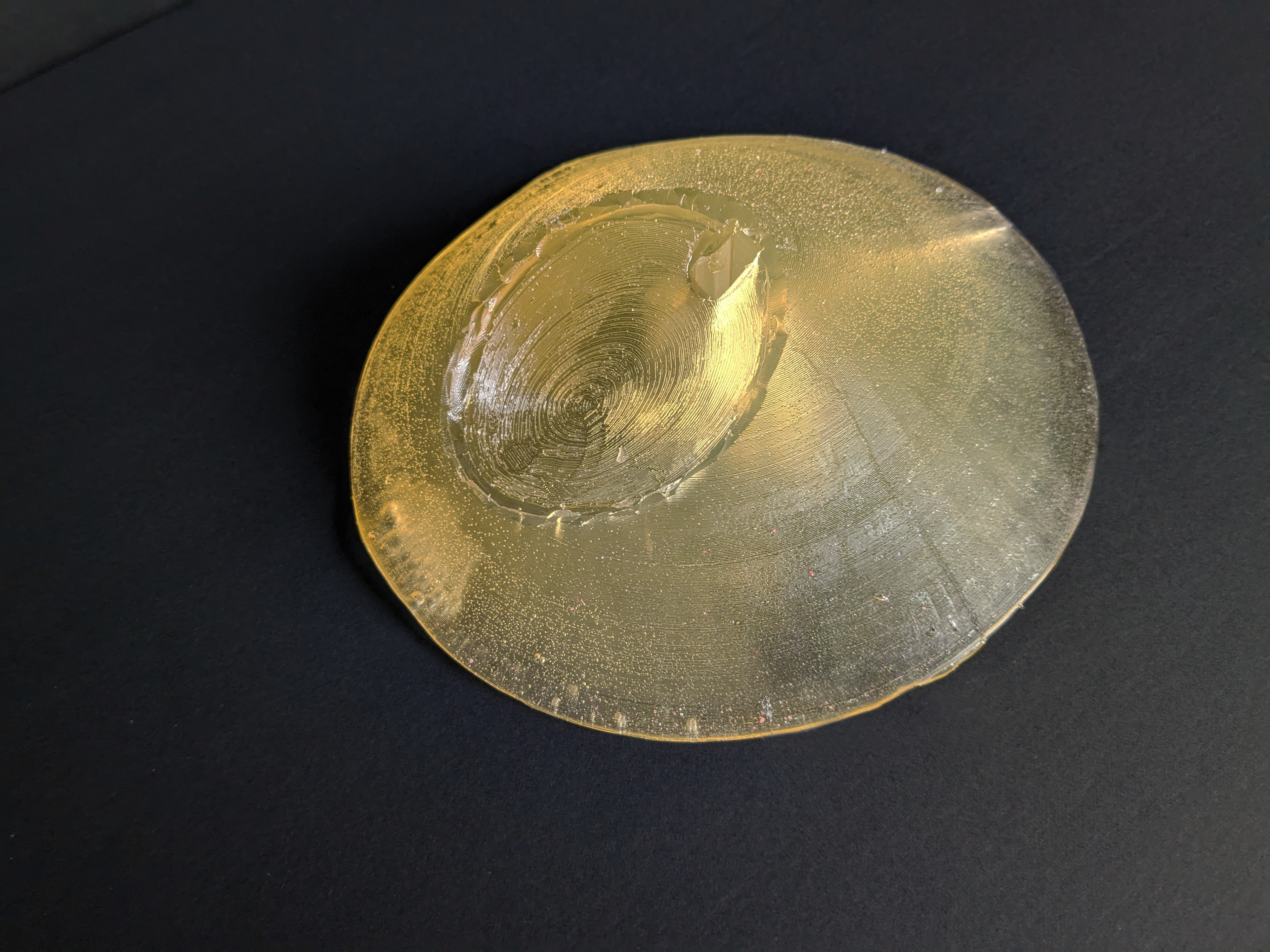
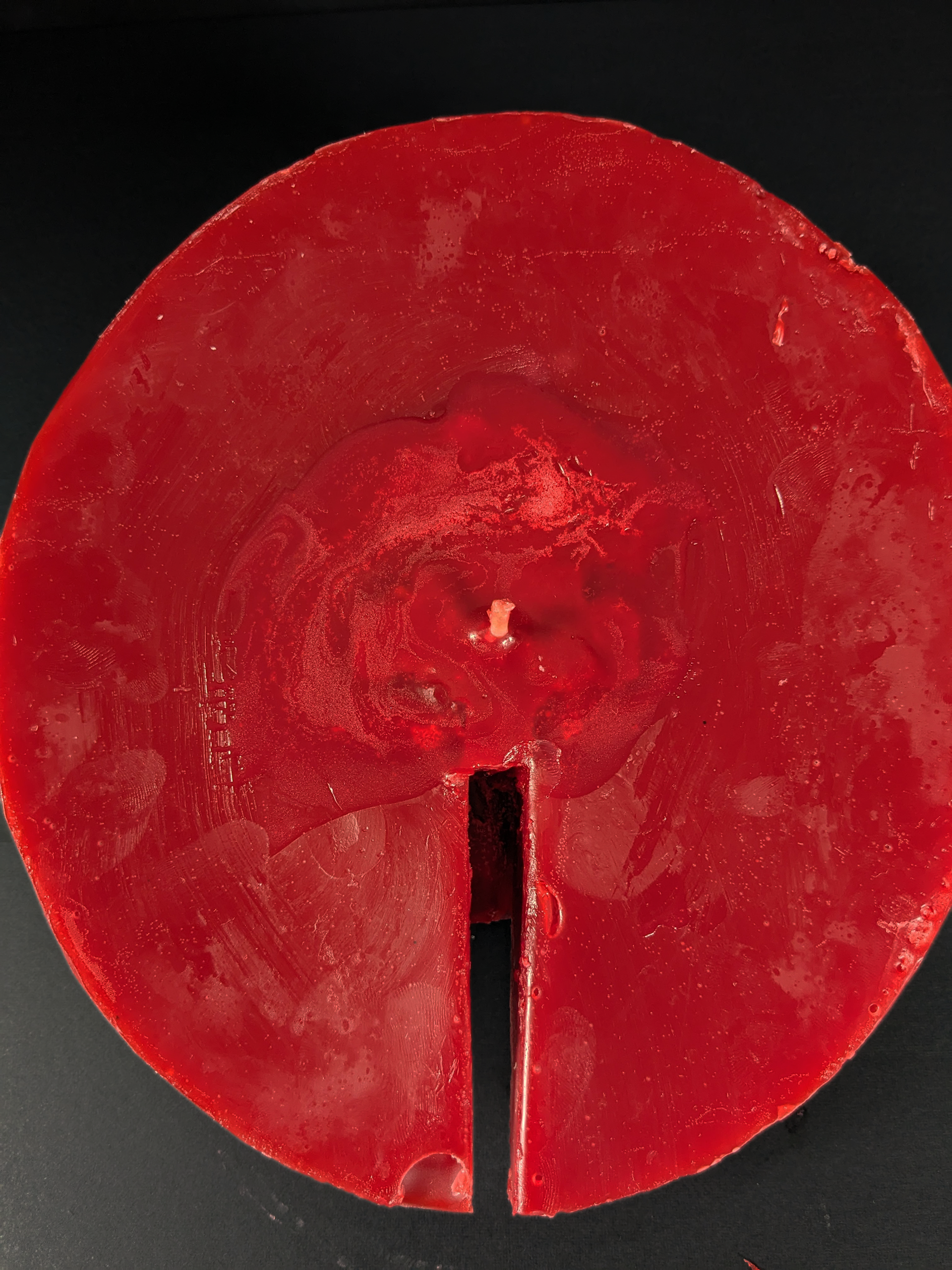
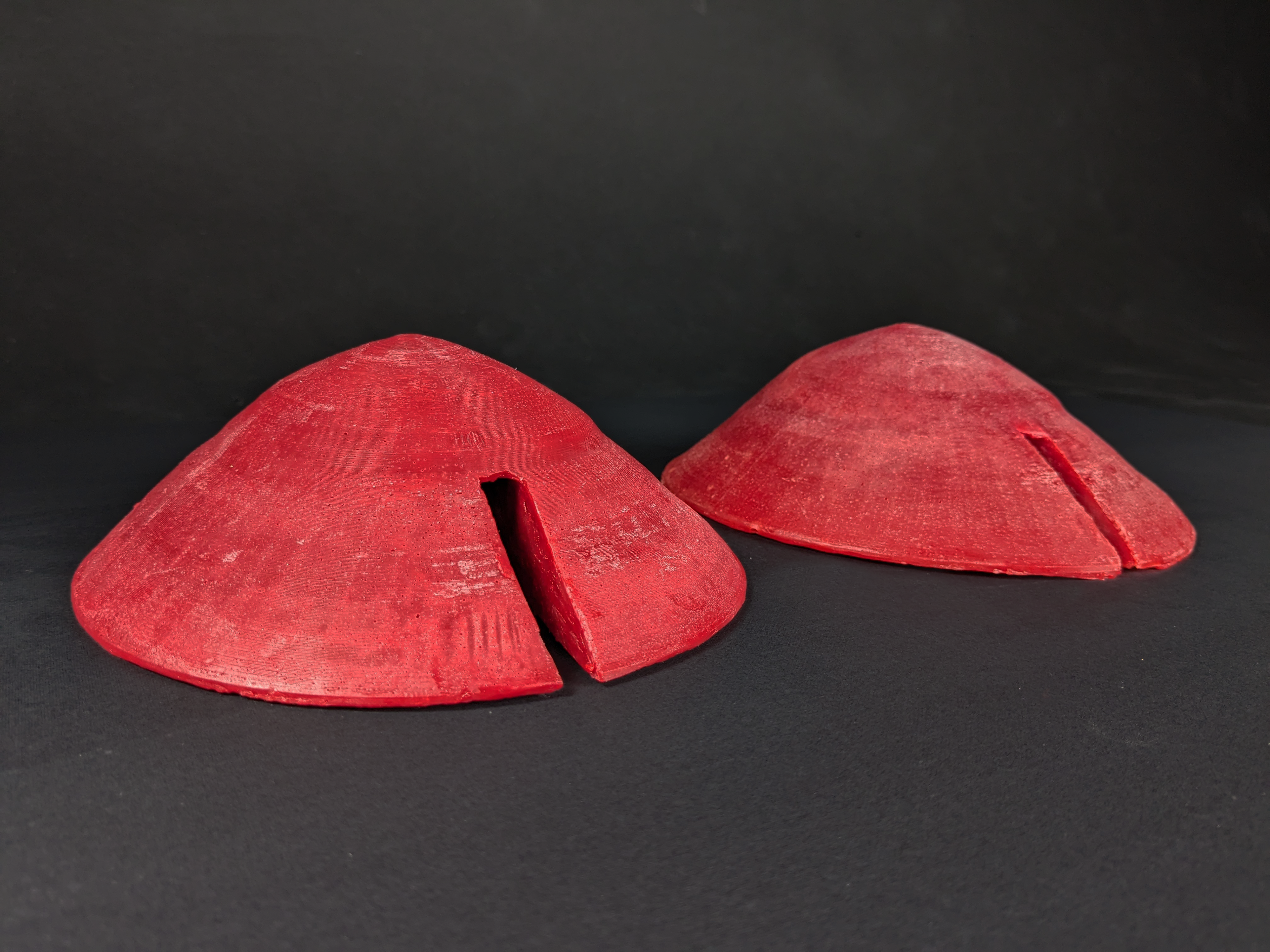
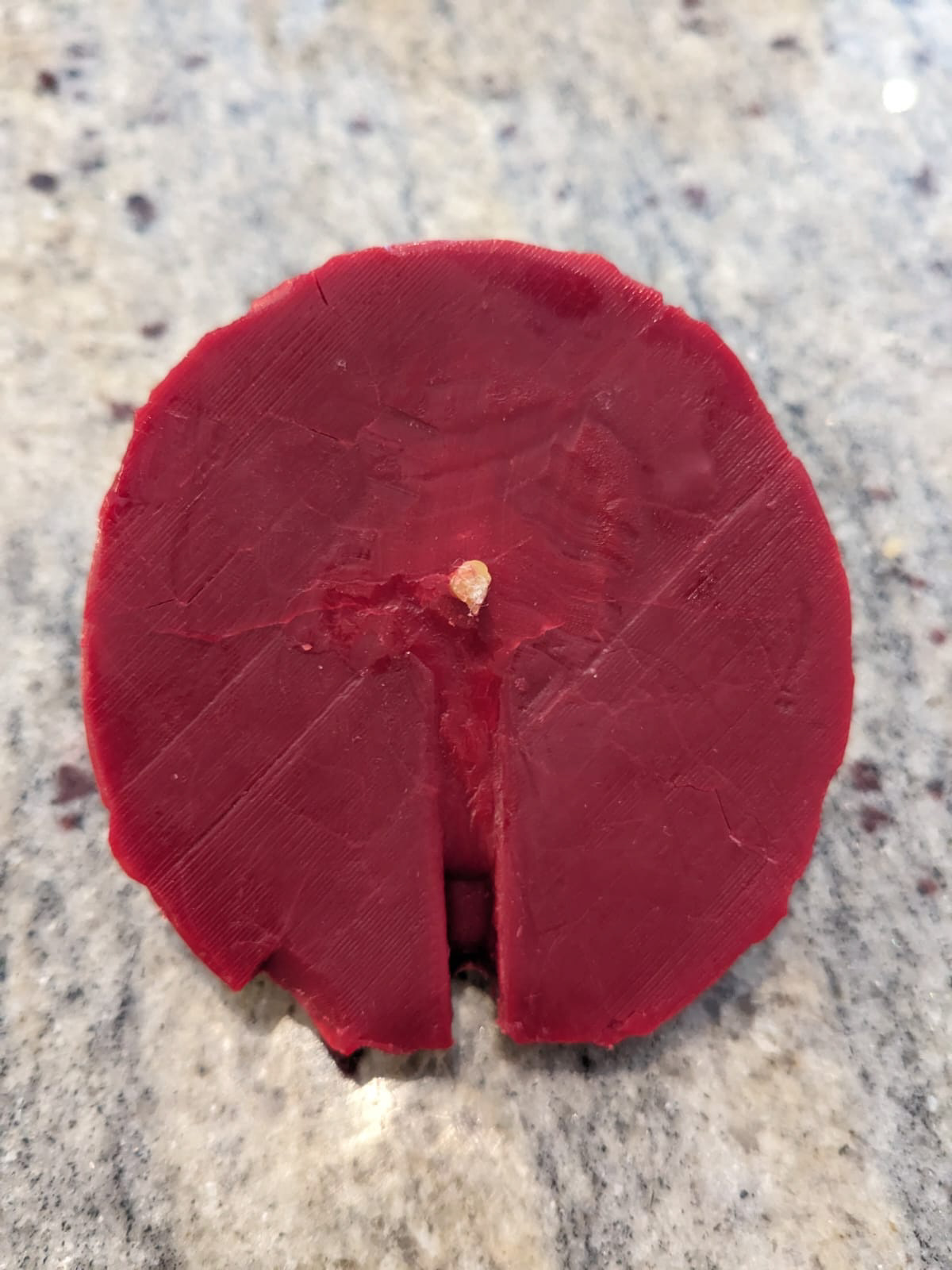
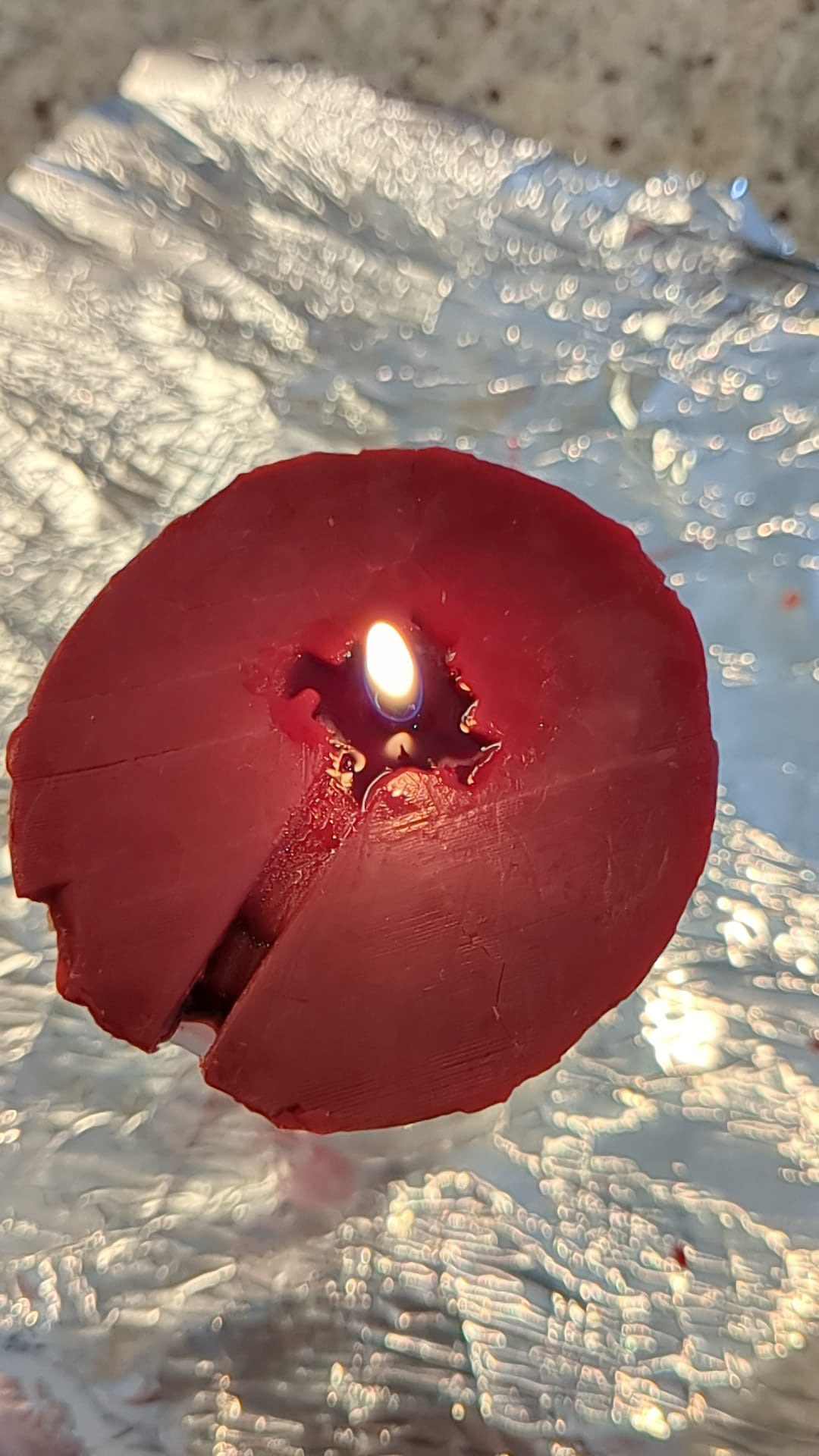
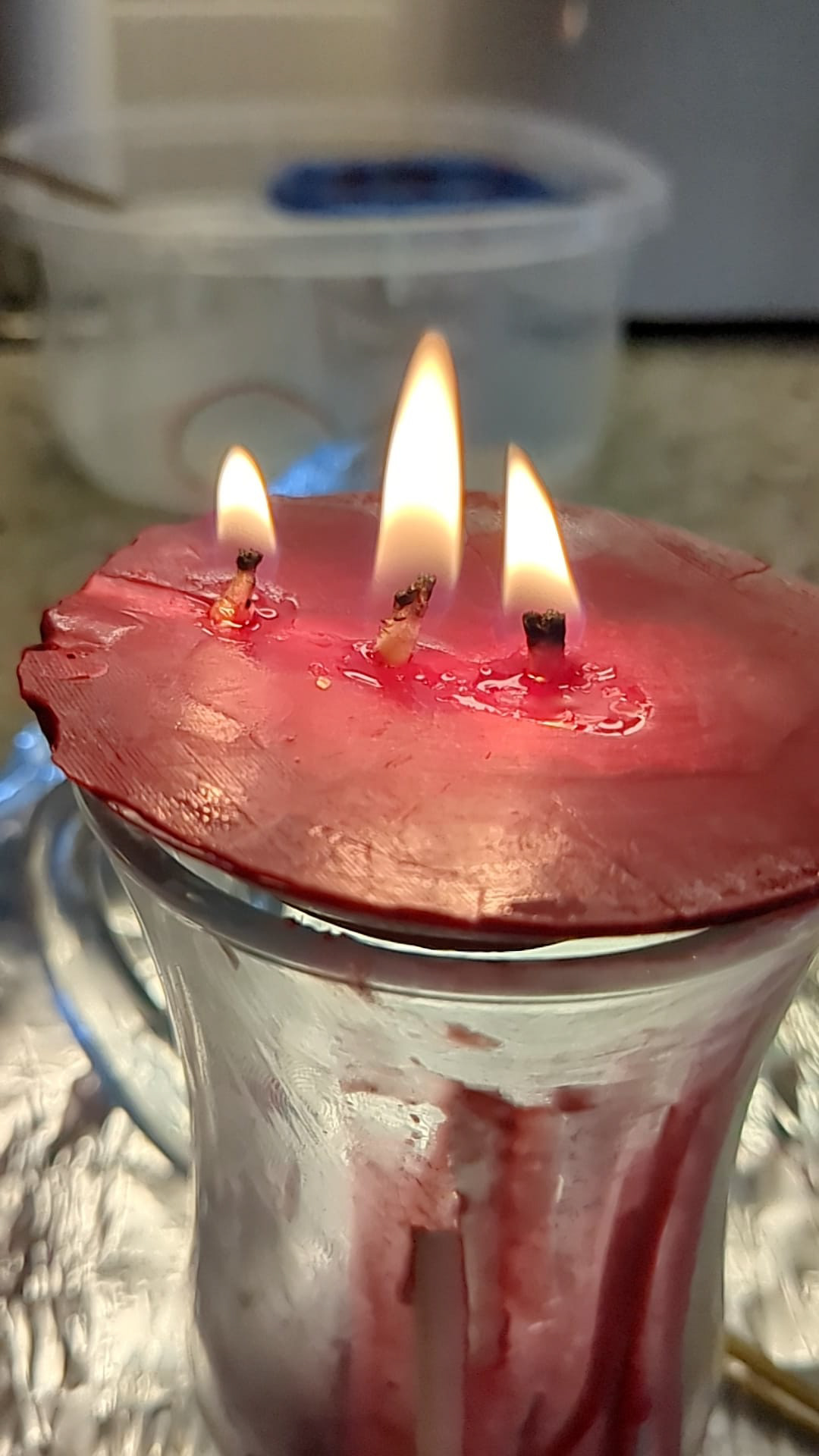
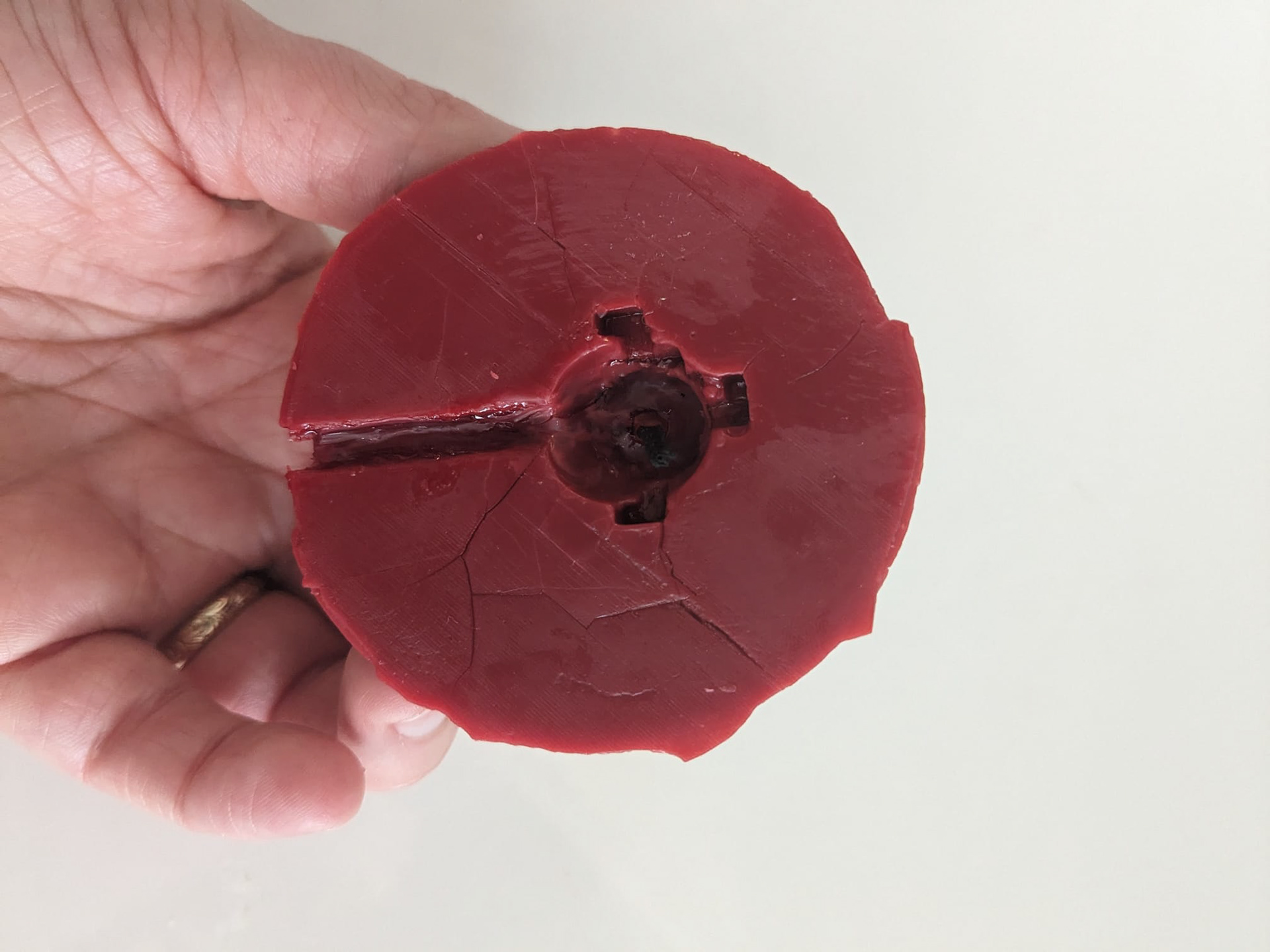
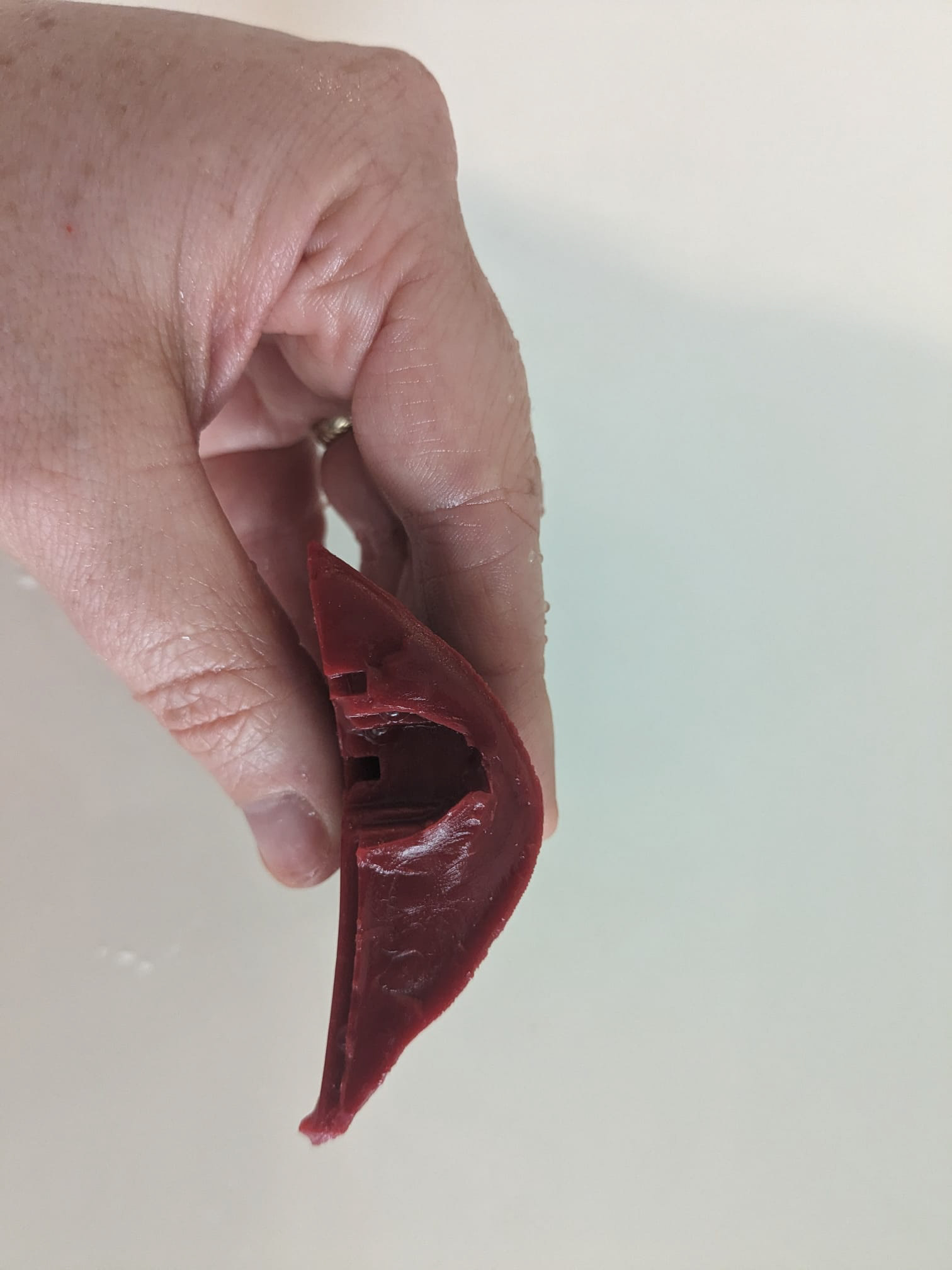
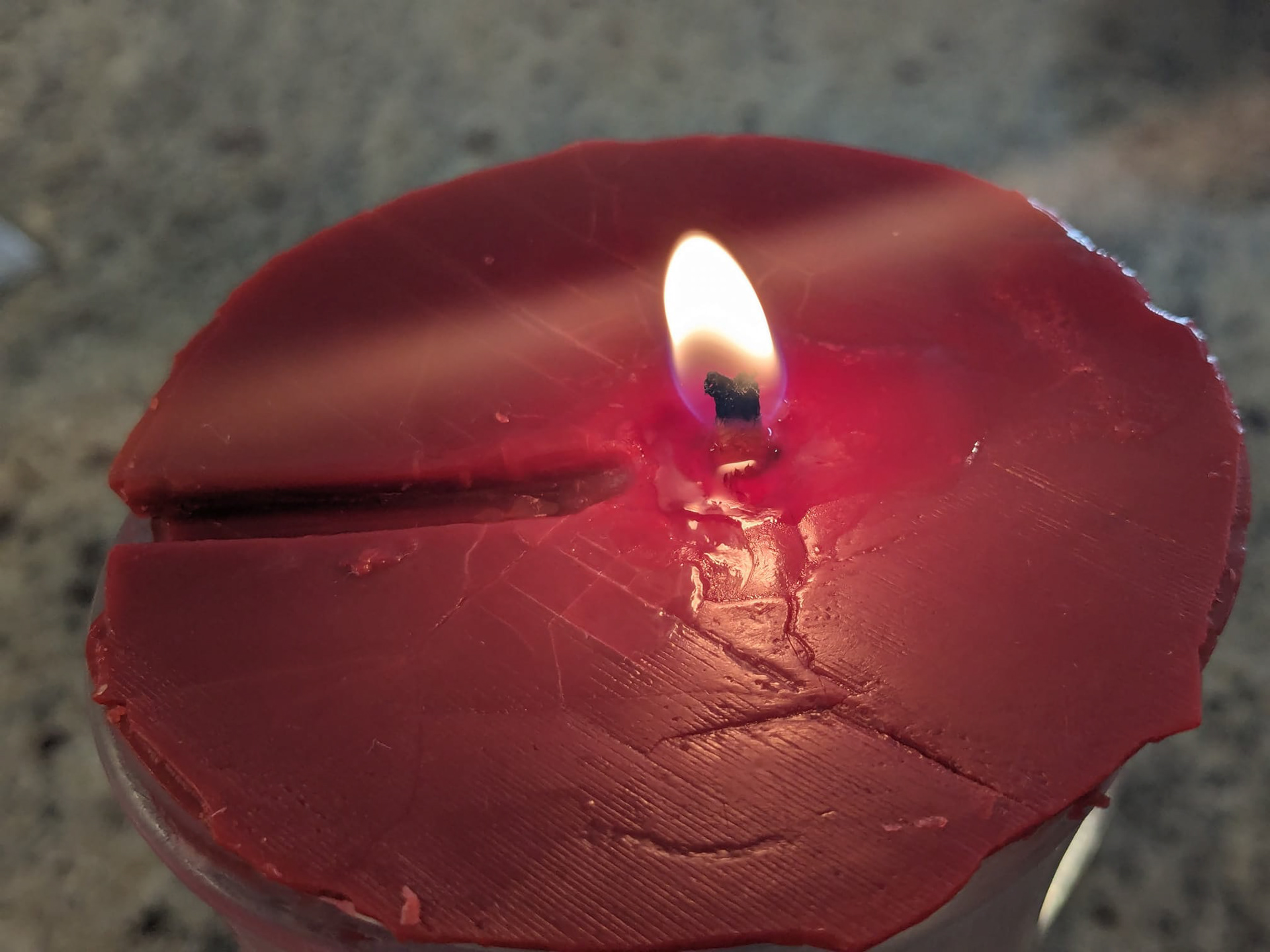
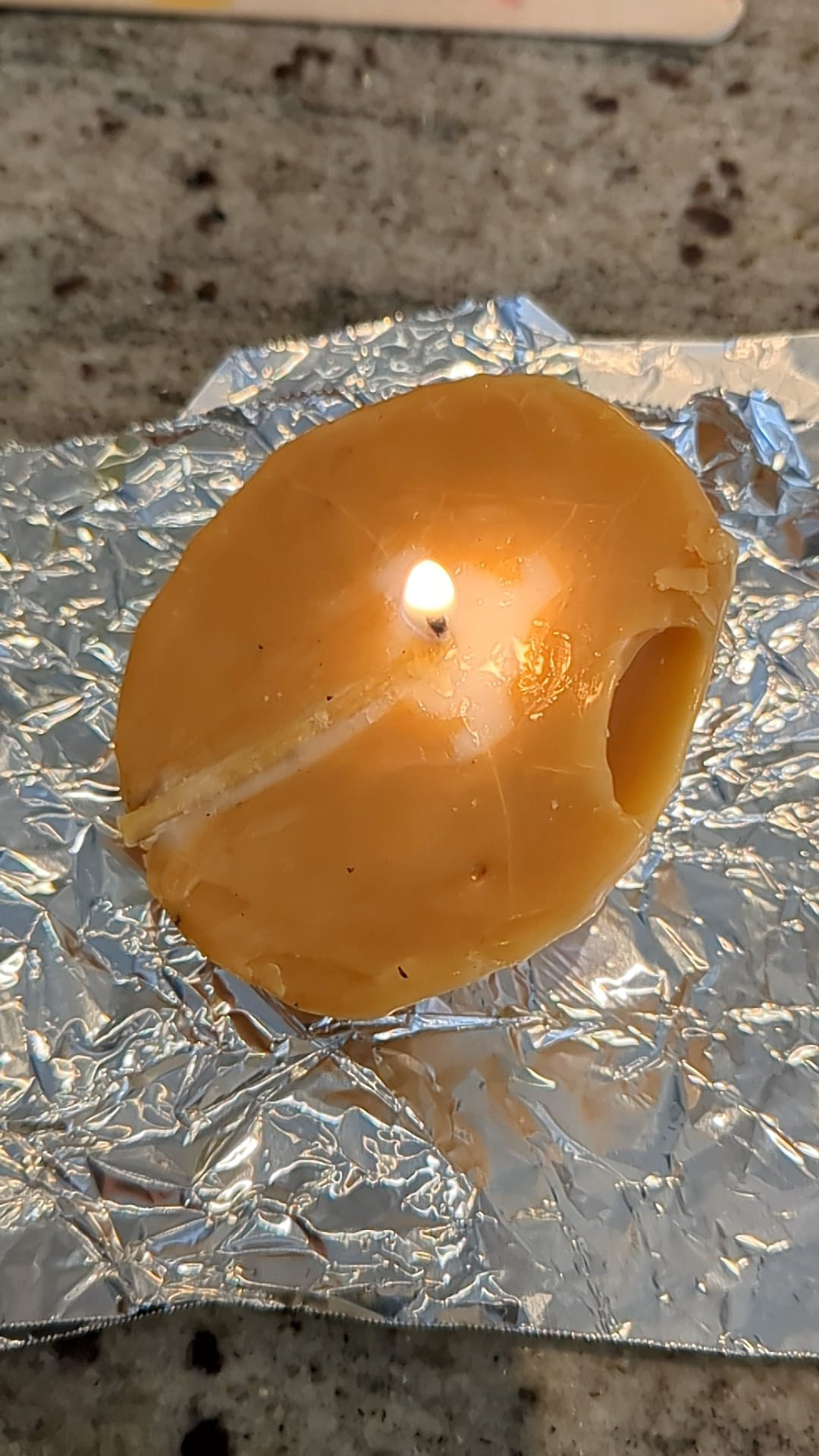
Maeshowe may appear to be a natural hill from the exterior, a key feature is the stone chamber found in the interior of the mound. For my model, I worked with wax and the process of melting to reveal an interior chamber of Maeshowe. The exterior of the model (beeswax) is made of a wax with a higher melting point than the interior chamber (coconut oil). Once the model is lit, the interior melts faster than the rest of the model, revealing the shape of Maeshowe’s chamber. As the wax drips, it fills the bottom stand, which also has a cavity in the shape of the chamber. Once the interior has entirely melted, the shape of the chamber will be visible in red through the semi-transparent base (gelatin). The burning of the model give it a temporal and performative aspect.
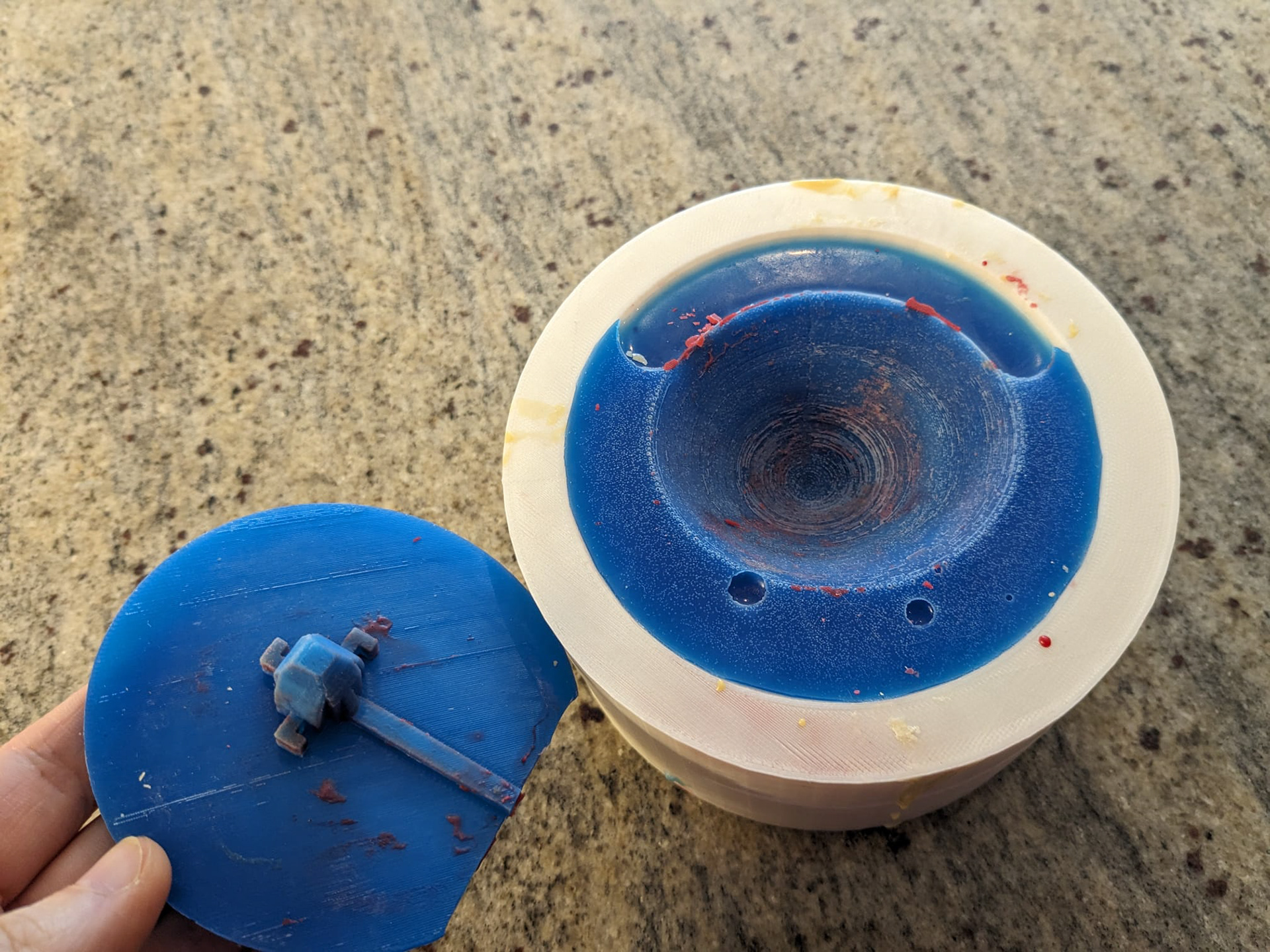
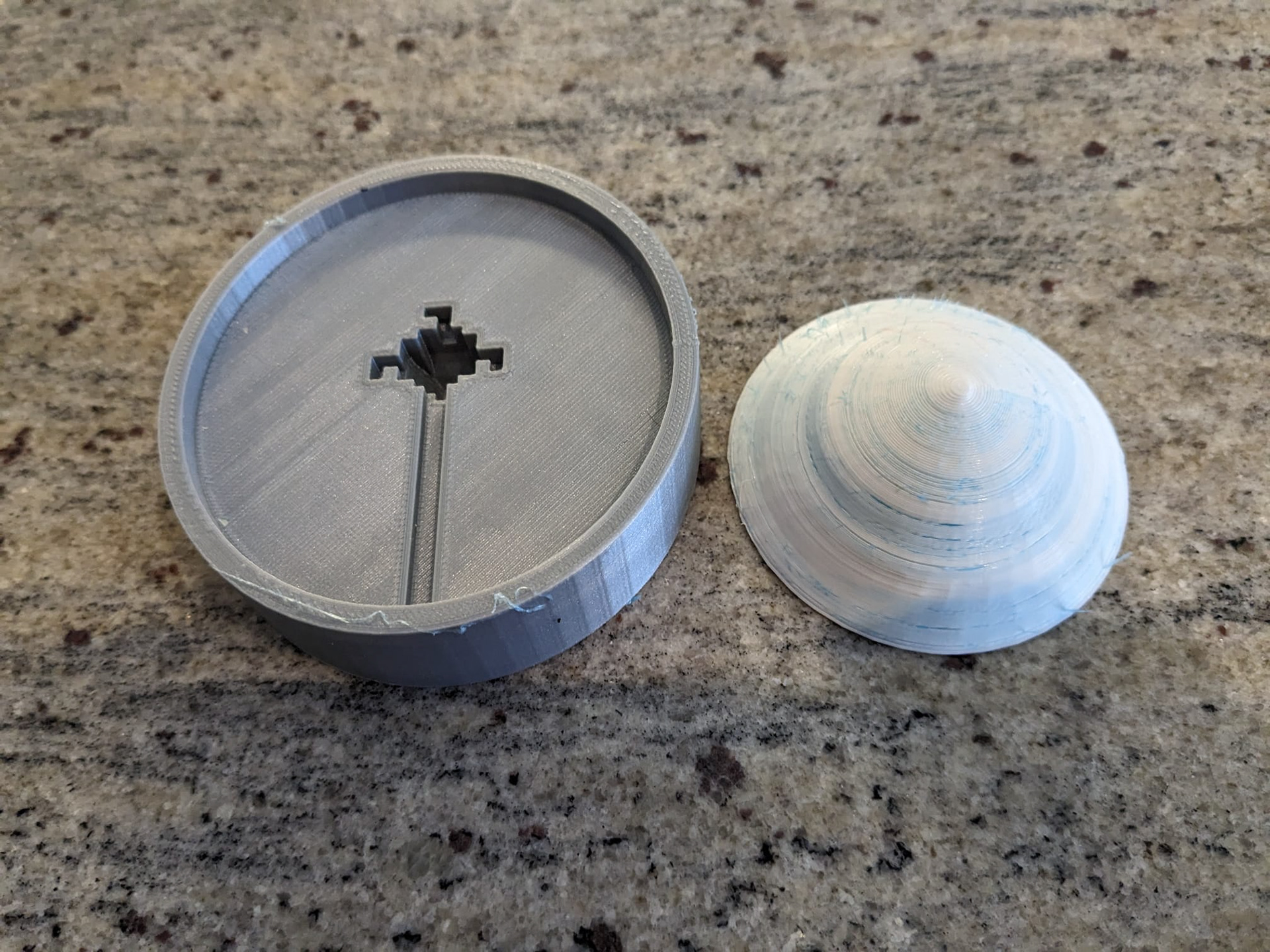
To construct the model, I modelled the shape of the mound and chamber using digital software, which I then 3D printed. I then made silicone molds from the 3D prints. Afterwards, I melted the wax using a double boiler on my stove, and poured the hot wax into the silicone mold. I placed the chamber insert into the hot wax and let the model cool. Then, I removed the insert after 2 hours of cooling, and fully removed the model from the mold once it had fully cooled (roughly six hours). Following those steps prevented any cracking of the model. For the gelatin base, I used a recipe from the artisit Brenda Reid, which includes 16 packets unflavored gelatin, 1.5 cups glycerin, 0.5 cup cold water, and 1.5 cups boiling water. The base used the same silicone mold as the wax model, but used different 3D printed inserts.
Maeshowe may appear to be a natural hill from the exterior, a key feature is the stone chamber found in the interior of the mound. For my model, I worked with wax and the process of melting to reveal an interior chamber of Maeshowe. The exterior of the model (beeswax) is made of a wax with a higher melting point than the interior chamber (coconut oil). Once the model is lit, the interior melts faster than the rest of the model, revealing the shape of Maeshowe’s chamber. As the wax drips, it fills the bottom stand, which also has a cavity in the shape of the chamber. Once the interior has entirely melted, the shape of the chamber will be visible in red through the semi-transparent base (gelatin). The burning of the model give it a temporal and performative aspect.
To construct the model, I modelled the shape of the mound and chamber using digital software, which I then 3D printed. I then made silicone molds from the 3D prints. Afterwards, I melted the wax using a double boiler on my stove, and poured the hot wax into the silicone mold. I placed the chamber insert into the hot wax and let the model cool. Then, I removed the insert after 2 hours of cooling, and fully removed the model from the mold once it had fully cooled (roughly six hours). Following those steps prevented any cracking of the model. For the gelatin base, I used a recipe from the artisit Brenda Reid, which includes 16 packets unflavored gelatin, 1.5 cups glycerin, 0.5 cup cold water, and 1.5 cups boiling water. The base used the same silicone mold as the wax model, but used different 3D printed inserts.
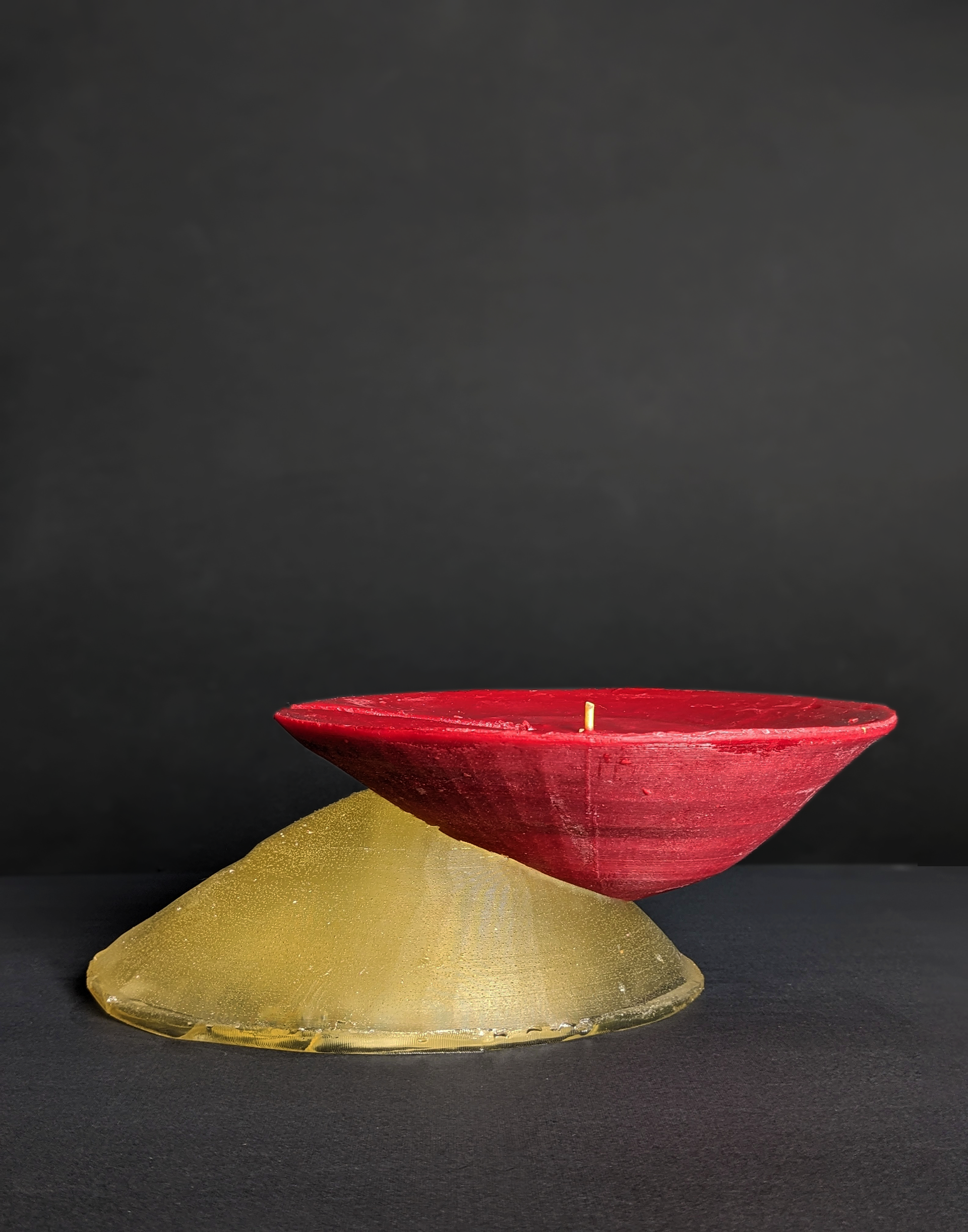
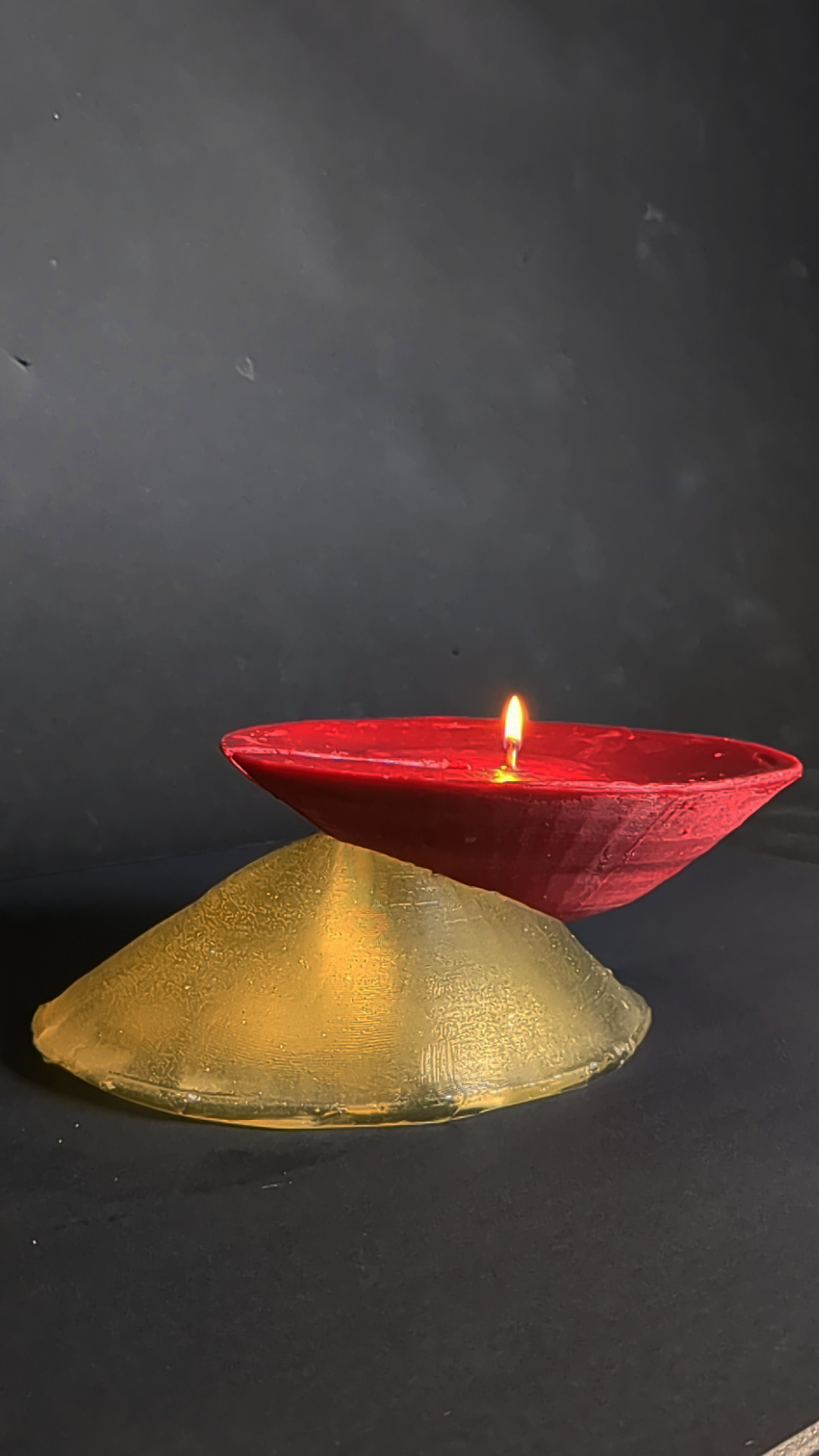
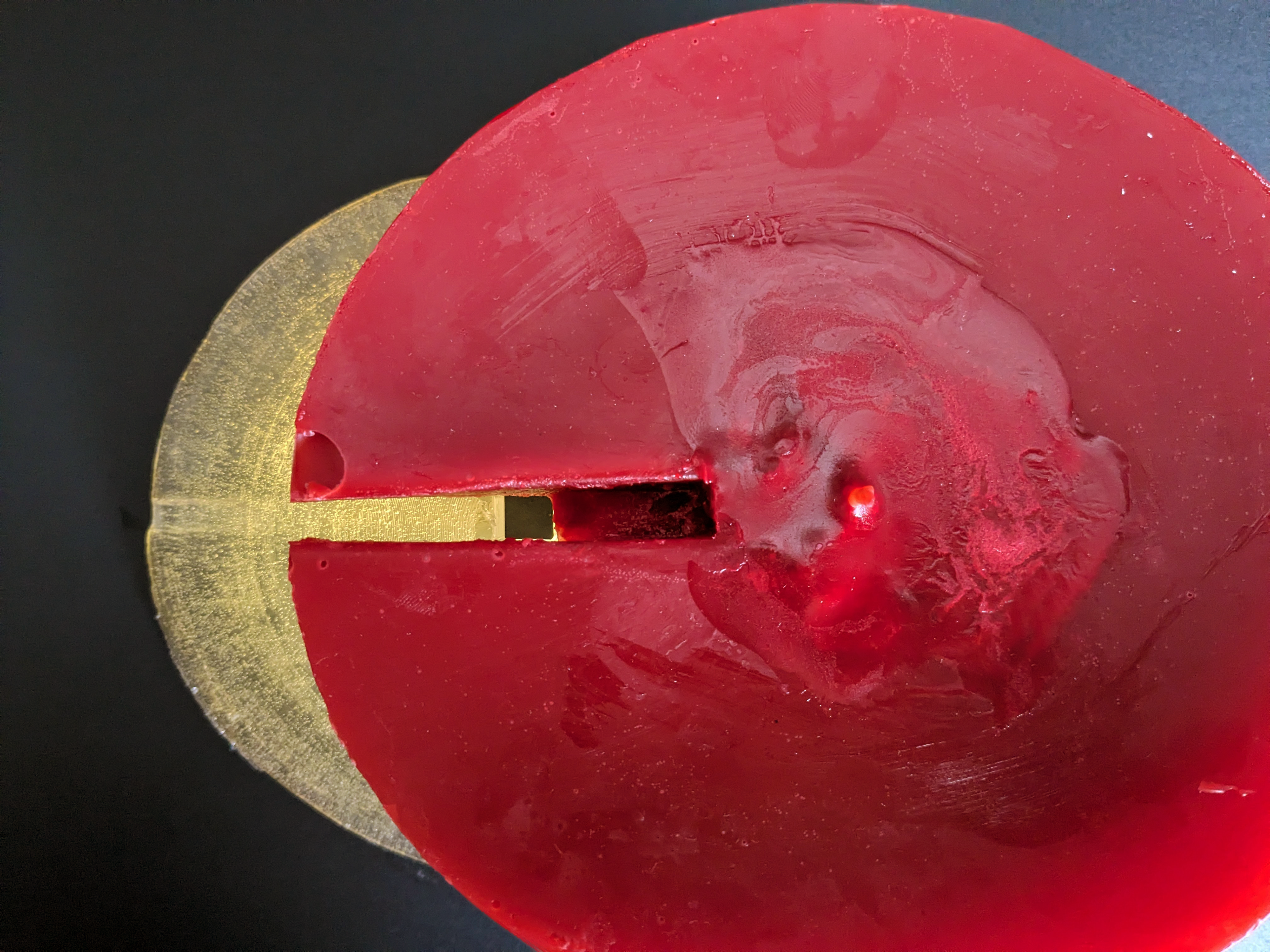
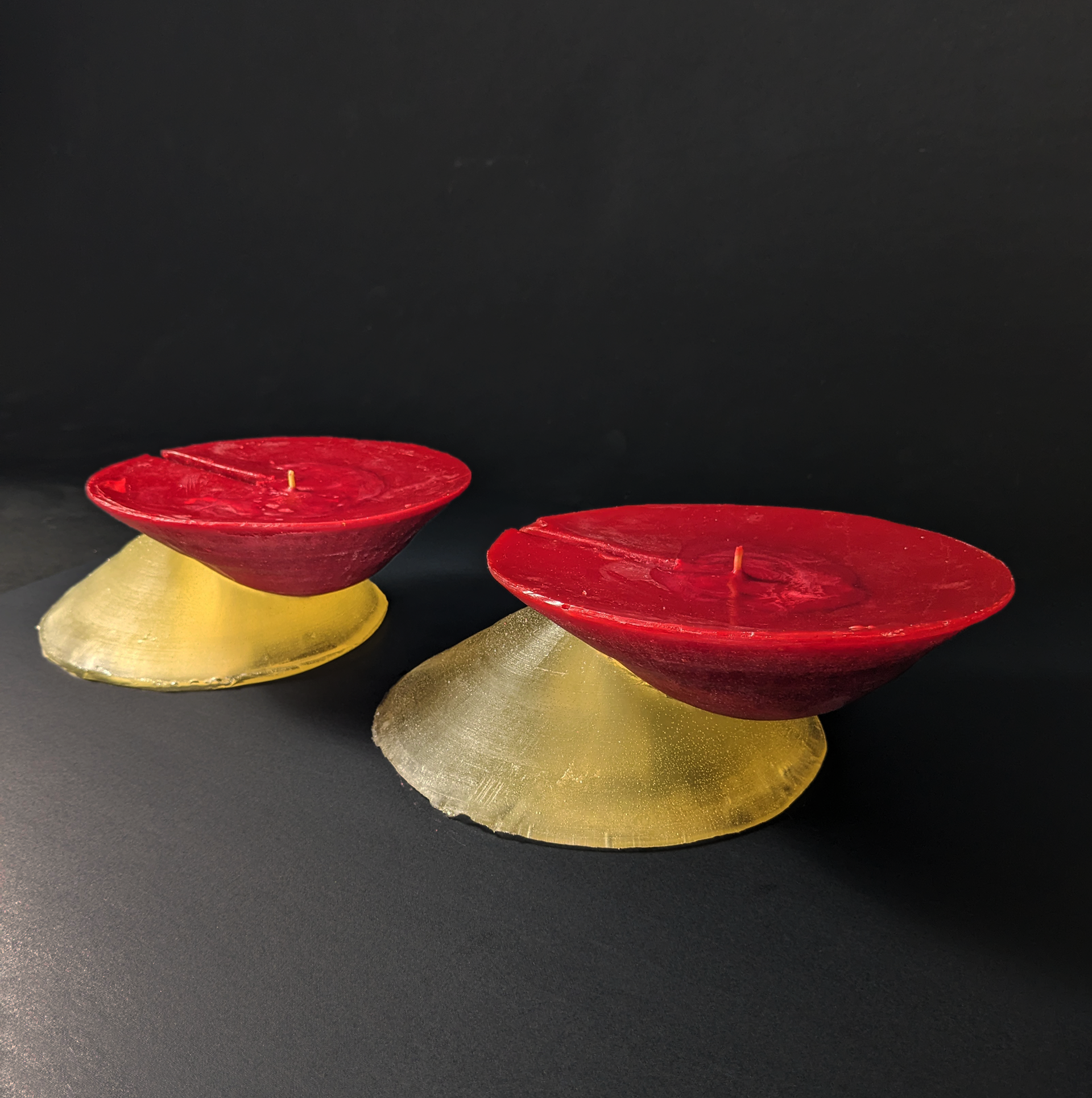
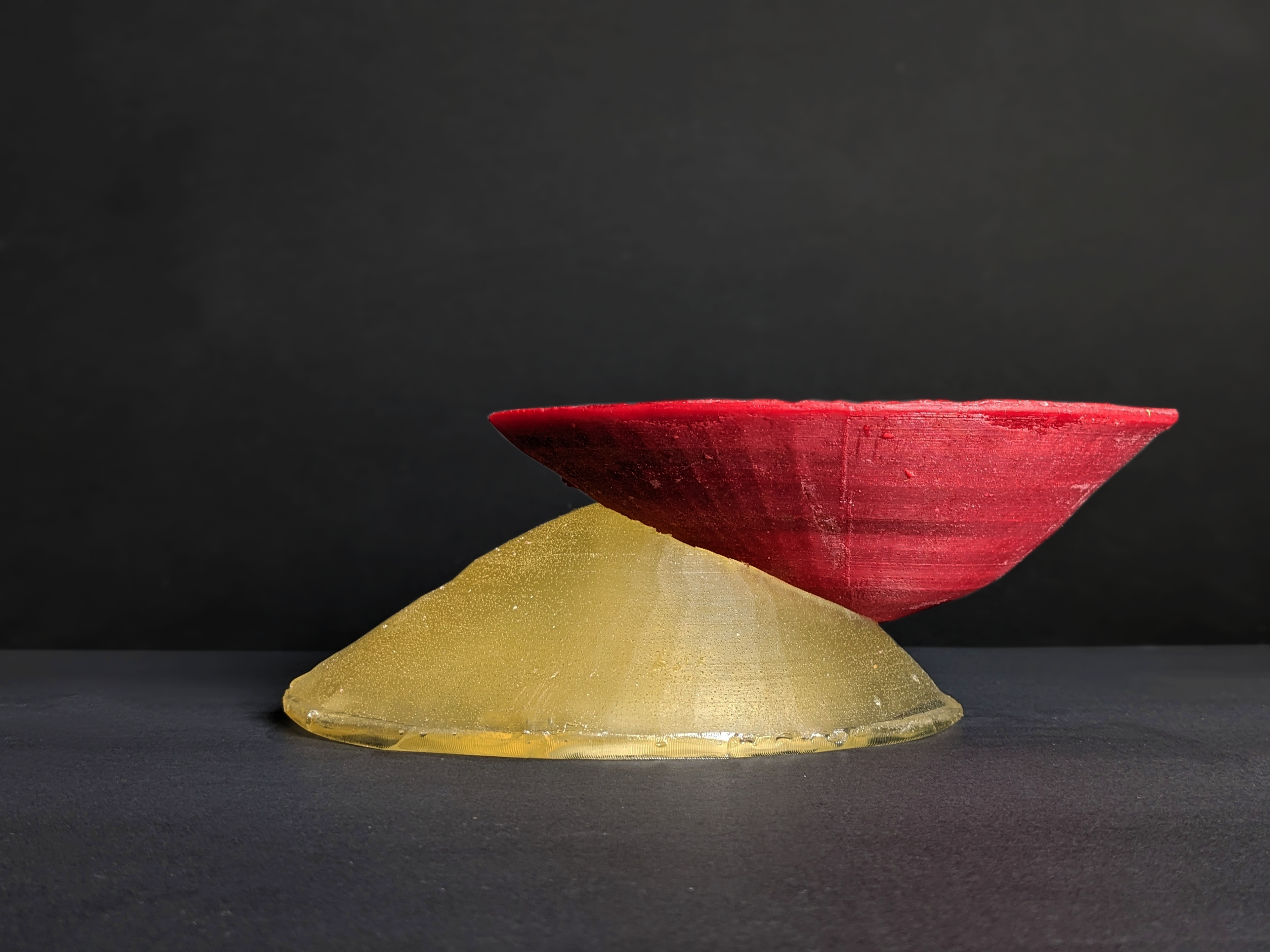
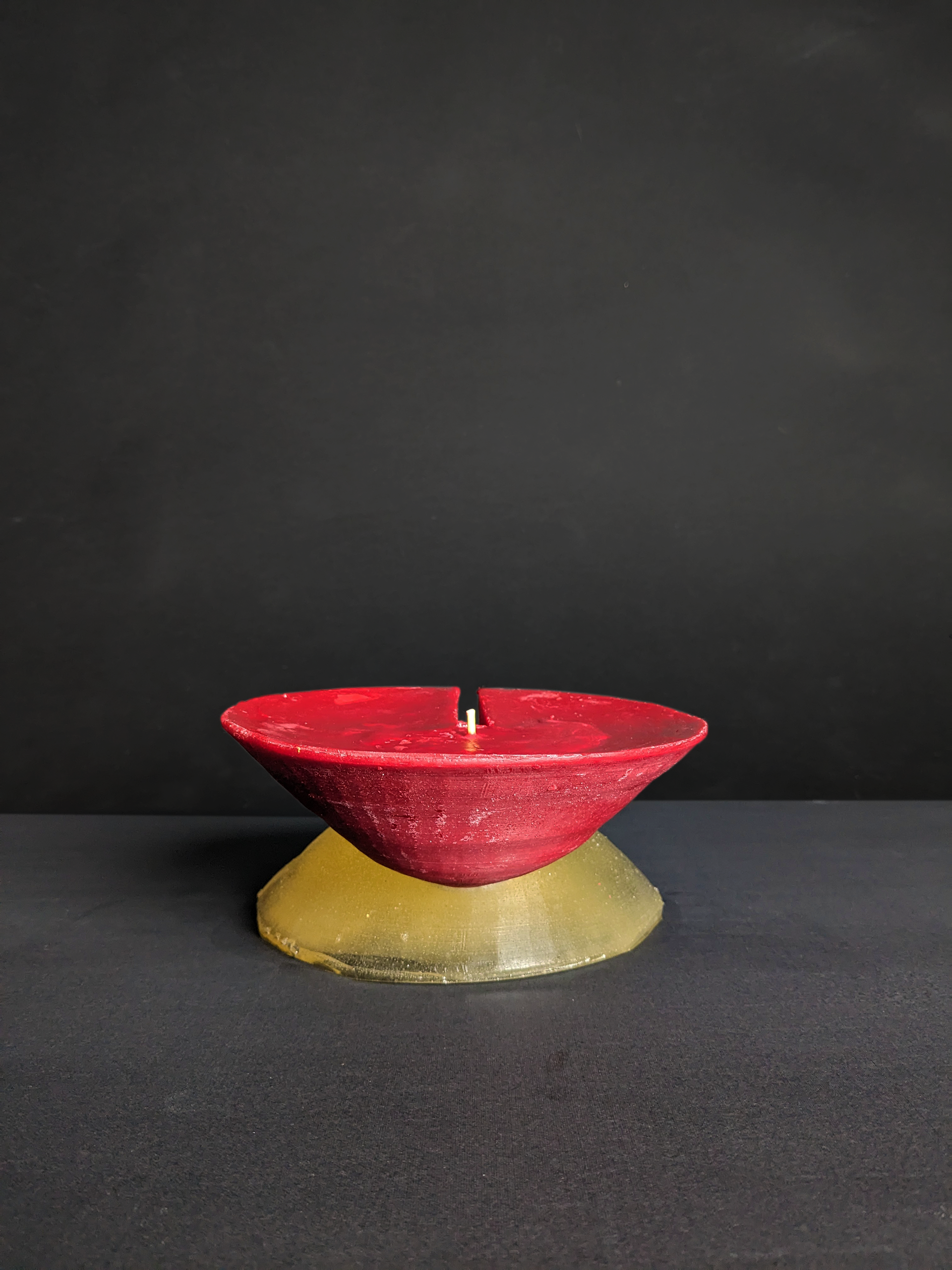
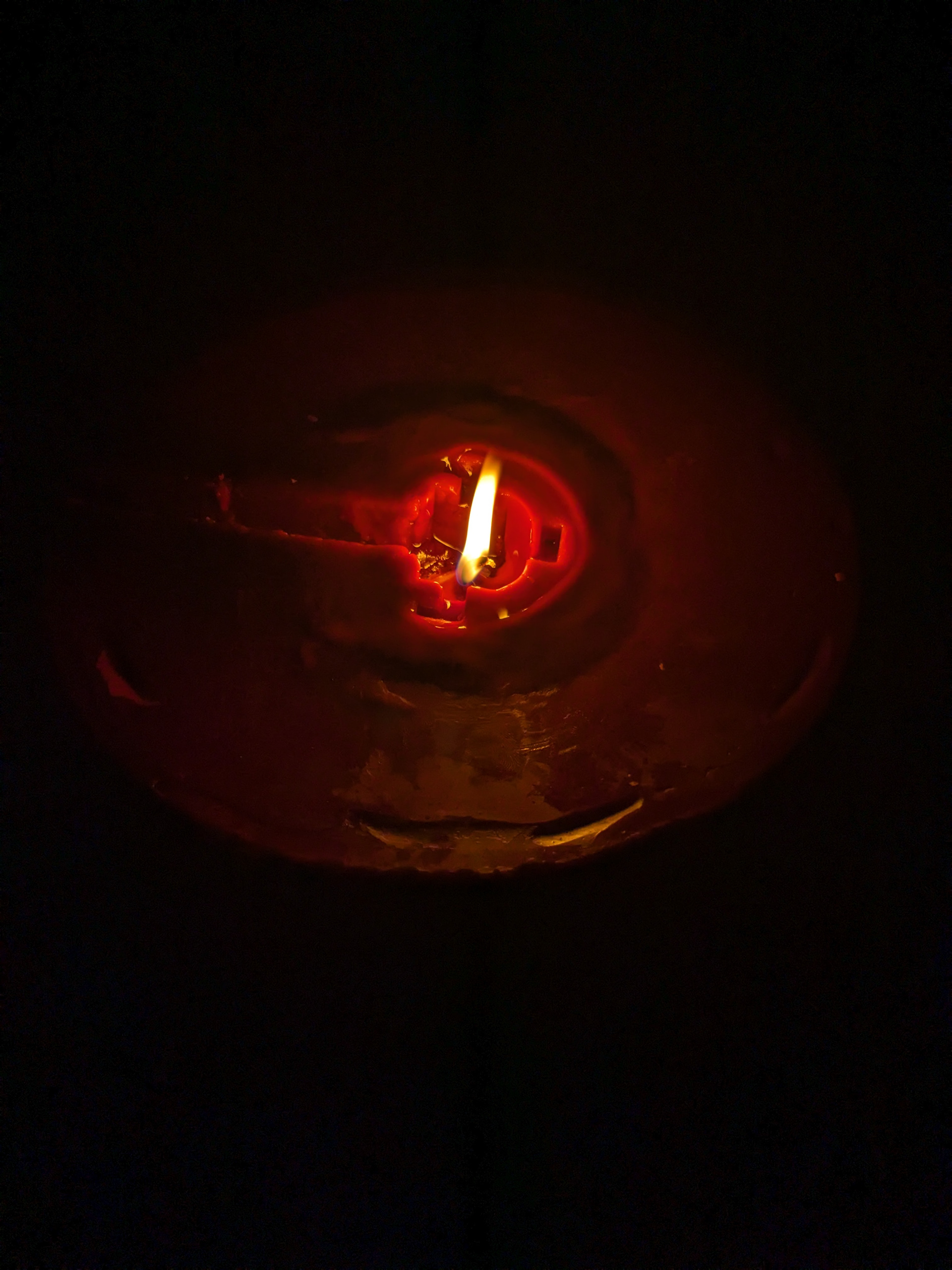
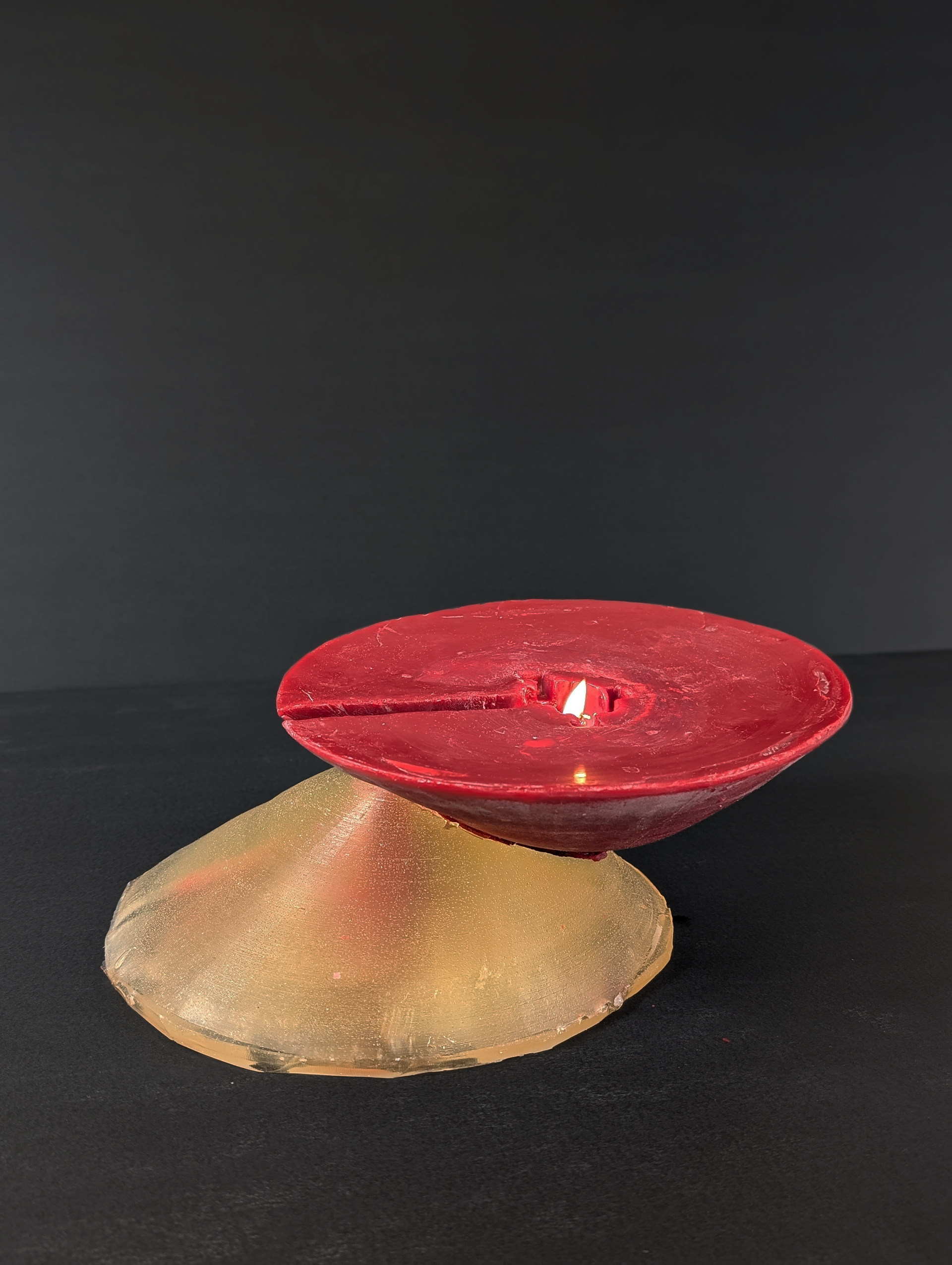
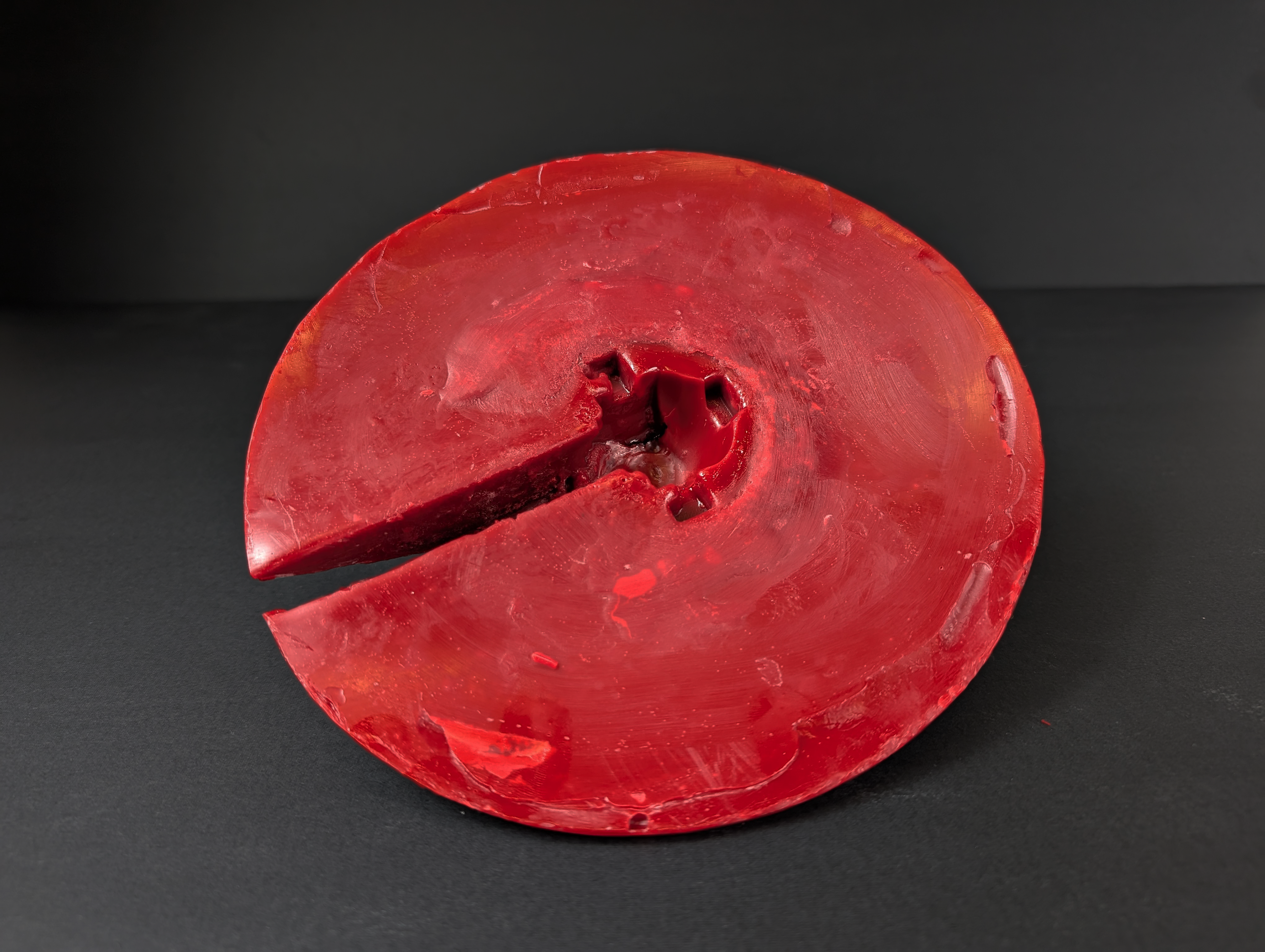
The interior chamber is revealed after the model has ben lit.
Work in Progress
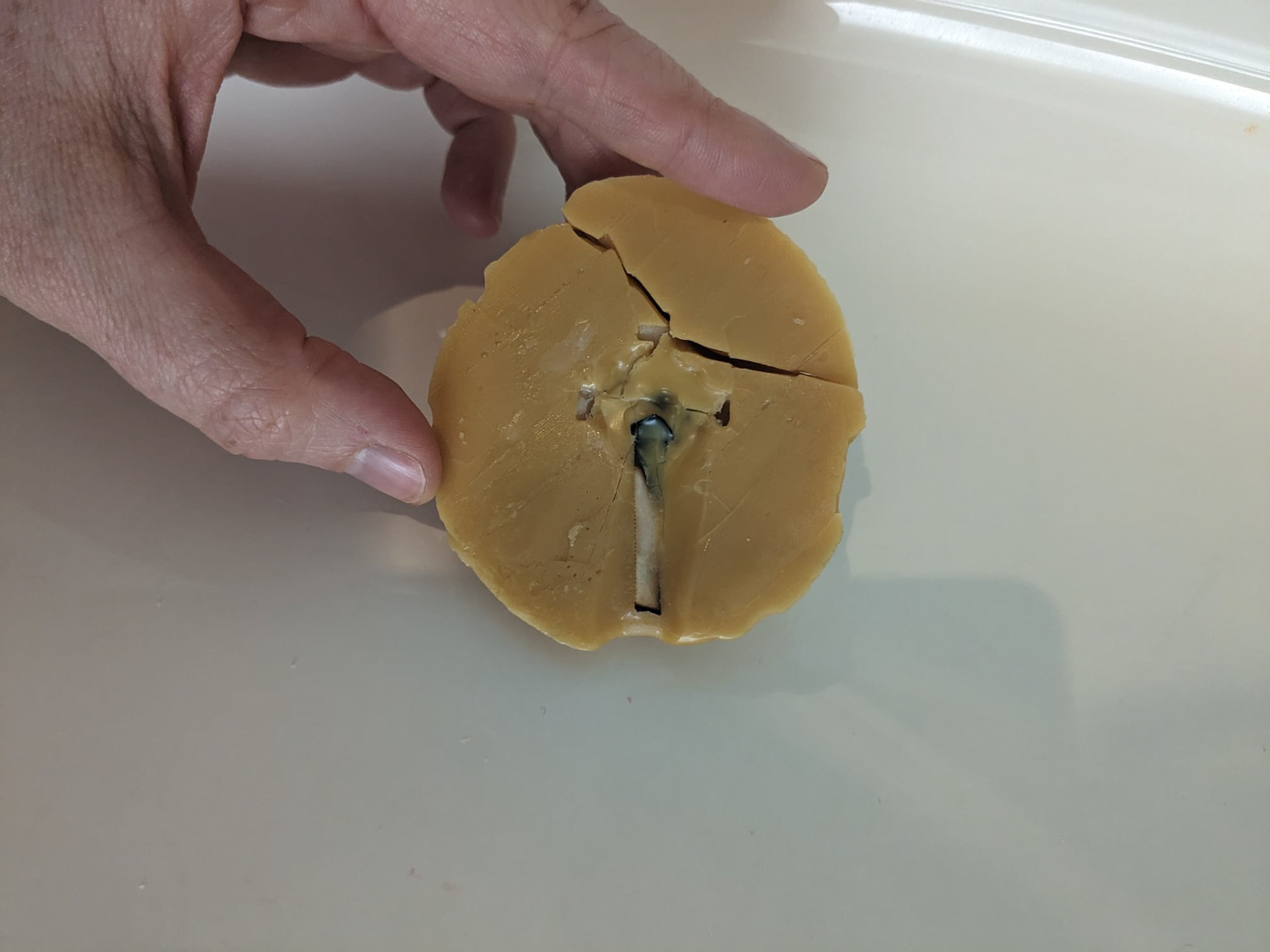
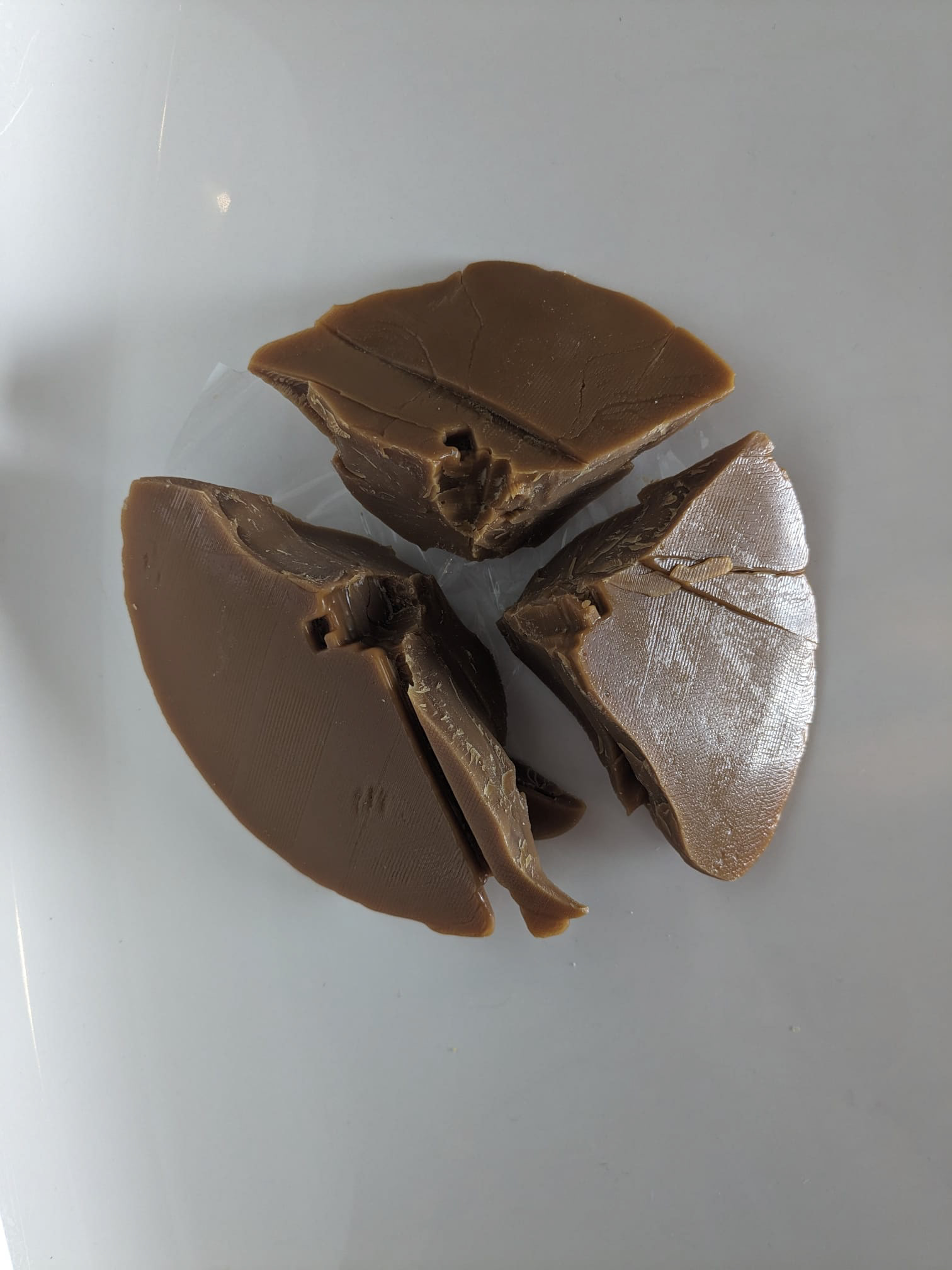
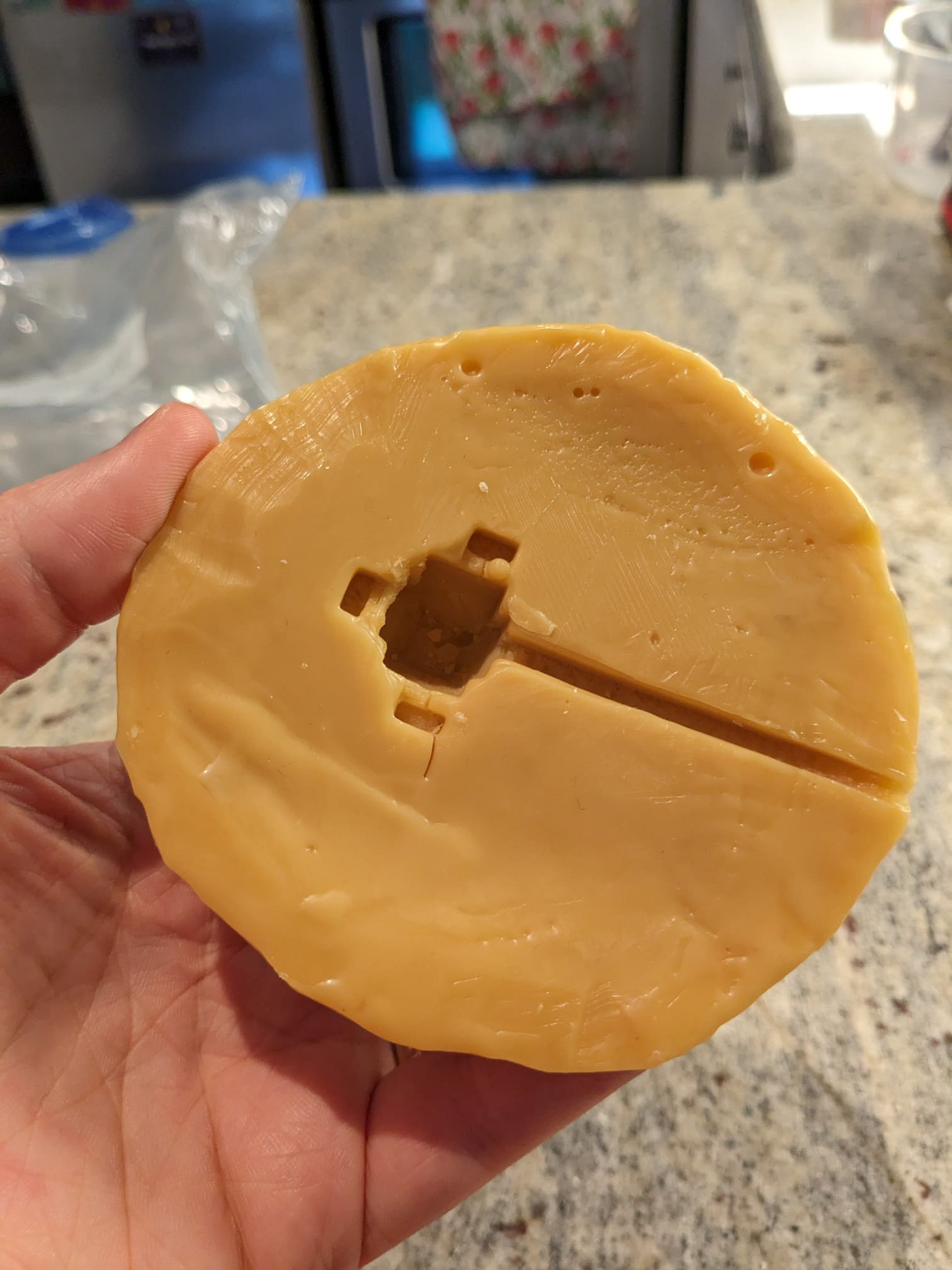
Lessons learned: I initially began working with gelatin to use it as a mold (as a cheaper and
biodegradable alternative to silicone). While the gelatin mold was successful for smaller wax pieces, the heat of the wax melted the gelatin with the larger sized models. Perhaps it was due to the larger size of the model: the wax would remain hot longer and thus melted the gelatin. Additionally, I originally used a ratio of 50% carnauba wax, and 50% beeswax for the exterior. Carnauba wax has a high melting point and is very brittle, but mixing it with beeswax made it easier to work with. While this recipe was successful for smaller tests, it did not work when scaling up. I tried using the 50/50 recipe multiple times, yet each model cracked. It seems that since the larger model takes longer to fully cool and harden, the interior stayed warm much longer while the exterior cooled quickly. I suspect the difference in temperature resulted in cracking, which was exasperated with the larger size of the final model.
biodegradable alternative to silicone). While the gelatin mold was successful for smaller wax pieces, the heat of the wax melted the gelatin with the larger sized models. Perhaps it was due to the larger size of the model: the wax would remain hot longer and thus melted the gelatin. Additionally, I originally used a ratio of 50% carnauba wax, and 50% beeswax for the exterior. Carnauba wax has a high melting point and is very brittle, but mixing it with beeswax made it easier to work with. While this recipe was successful for smaller tests, it did not work when scaling up. I tried using the 50/50 recipe multiple times, yet each model cracked. It seems that since the larger model takes longer to fully cool and harden, the interior stayed warm much longer while the exterior cooled quickly. I suspect the difference in temperature resulted in cracking, which was exasperated with the larger size of the final model.